Call Timimg – Monday- Friday: 8am- 8pm.
Saturday – Sunday: 9am – 6pm.
Call time– 24/7 All Day.
When you spot winged insects suddenly appearing around your property, you’re witnessing one of nature’s most organized events – swarming season. These flying invaders aren’t random visitors; they’re the future royalty of insect colonies, and their presence signals something much larger brewing beneath the surface. Understanding swarmer pests could save you thousands of dollars and protect your family’s safety.
Swarmer pests emerge from highly sophisticated insect societies with distinct social classes. These winged reproductives will eventually become the kings and queens of new colonies, but first, they need to find the perfect location – and that might just be your home or business. When property owners encounter swarmers, it’s nature’s early warning system in action. Recognizing and responding to this first danger sign can prevent a minor nuisance from becoming a major catastrophe.
Four primary swarmer species threaten American properties: termites, ants, wasps, and bees. Each presents unique challenges, from structural damage to health risks. Professional pest control services across the country report increased swarmer activity during peak seasons, making identification and prevention crucial for homeowners and business operators alike.
The Termite Threat: Silent Destroyers in Flight
Among all swarmer pests, termites pose the greatest financial threat to property owners. These social insects have perfected the art of cellulose consumption, targeting wood, cotton, and other plant-based materials that form the backbone of our buildings. A termite control service becomes essential when dealing with these destructive invaders.
Termite colonies operate with military precision through distinct castes: soldiers guard the colony, workers maintain operations and care for young, while swarmers handle reproduction. Workers comprise 90 to 98% of any colony, laboring invisibly within your walls. The remaining percentage consists of swarmers – the reproductive caste that emerges seasonally to establish new territories.
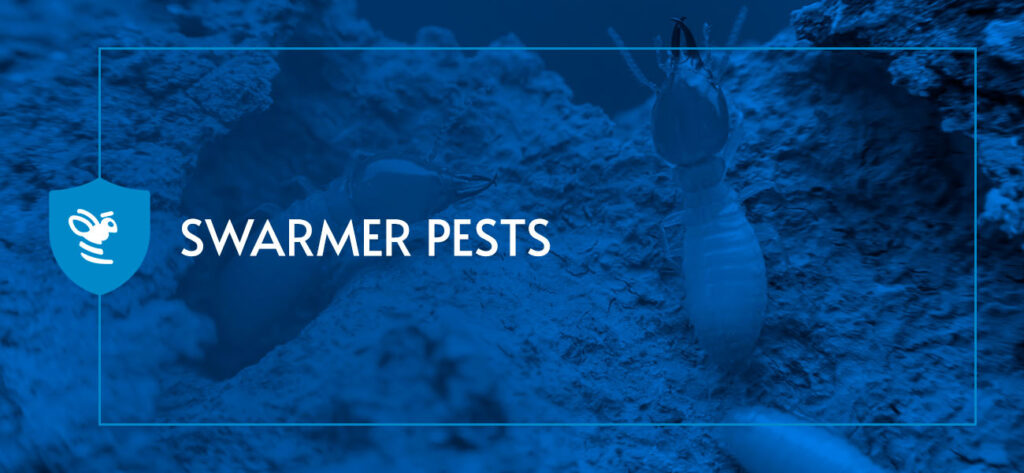
Termite swarmers measure approximately 1/4-inch to 3/8-inch in length, displaying colors from coal black to pale yellowish-brown. During their reproductive phase, they sport four equally-sized wings that they’ll shed after successfully mating and establishing their new colony. The transformation from winged swarmer to colony royalty marks the beginning of decades of potential property damage.
The annual cost of termite damage in the United States reaches billions of dollars, affecting wooden structures, books, files, clothing, insulation, swimming pool liners, and filtration systems. Any material containing cellulose becomes a potential target for these relentless feeders.
Property owners should watch for several telltale signs of termite activity. Discarded wings near wooden structures indicate a new colony has formed nearby – these shed wings often appear near windowsills, door frames, or other light sources that attract swarmers. Mud shelter tubes running along foundations, crawl spaces, or wooden structures provide protected highways for worker termites. Spring brings increased termite sightings as swarming season peaks. Perhaps most eerily, soft scratching noises within walls signal soldier termites “head-banging” to alert workers of potential danger.
When facing a termite infestation, the best pest control service becomes your most valuable ally. A termite treatment company possesses the expertise, equipment, and chemicals necessary to eliminate colonies and prevent future invasions. However, property owners can take immediate steps to limit damage: reduce moisture levels throughout the building, remove cellulose-based materials from around the foundation, and ensure vegetation maintains safe distances from exterior walls.
Call Timimg – Monday- Friday: 8am- 8pm.
Saturday – Sunday: 9am – 6pm.
Call time– 24/7 All Day.
Ant Invasions: The Organized Food Raiders
Flying ants, or swarmer ants, represent the reproductive caste within ant colonies, sharing remarkable similarities with termite swarmers. Both species develop four wings that they shed after establishing new colonies, and both can appear nearly identical when observed from a distance. However, an experienced ant exterminator near me can quickly distinguish between these species using key identifying features.
Termite swarmers display straight antennae, broad waists uniform in width with their bodies, and four equally-sized wings. Ant swarmers feature distinctly different characteristics: elbowed or kinked antennae, thin pinched waists creating three distinct body regions, and wing sets consisting of two large front wings paired with two smaller hind wings.
Unlike termites’ specialized cellulose diet, ants will consume virtually any available food source, showing particular preference for sweet substances. While ants do chew through wooden structures when building nests, they typically cause less structural damage than termites. The extent of ant-related damage depends on nest numbers and infestation duration.
Ant control service professionals report that food-related issues overshadow structural concerns in most ant infestations. Property owners commonly discover ant trails leading to and from food sources – these highways reveal the insects’ remarkable organizational abilities. Additional infestation signs include small sawdust piles near wooden structures, nests visible in wall openings, and soft rustling sounds emanating from within walls.
Standard ant control methods rely heavily on strategic baiting using sugary carbohydrates or proteins. This approach effectively eliminates small infestations and controls larger ones. Property owners should maintain clean, sealed food areas, reduce moisture levels, and block potential access points. Significant ant infestations require professional intervention from a local pest control company.
Wasp Dangers: When Swarmers Become Life-Threatening
While ant and termite concerns center on hygiene, food spoilage, and structural damage, wasp infestations present immediate health threats. Unlike ants, whose stings cause minor discomfort, wasp stings can prove fatal – especially for individuals with allergies. Statistical data reveals that wasp, hornet, and bee stings cause an average of 62 deaths annually in the United States.
Emergency pest control services focus primarily on social wasp species: paper wasps, yellow jackets, and hornets. Solitary species like cricket hunters or cicada killers don’t build community nests or engage in swarming behavior, making them less concerning for property owners.
Social wasps exhibit two distinct swarming patterns. Reproductive swarming occurs during fall months when colonies lack nests or larvae requiring protection. Defensive swarming happens when someone or something disturbs an active nest – these aggressive responses can result in multiple stings and serious injuries.
Social wasp colonies follow annual cycles, building new nests from scratch each year after worker wasps die and fertilized queens survive winter dormancy. Male drones die after mating, leaving only pregnant queens to restart the cycle. All wasp nests share a distinctive papery appearance, constructed from chewed wood fibers mixed with saliva.
Each social wasp species displays unique characteristics requiring different approaches from pest exterminator professionals. Paper wasps appear slender, measuring 3/4 to one inch long, with colors ranging from reddish-orange to dark brown. Queens barely exceed worker wasp sizes, and colonies typically establish nests in attics, barns, garages, storage sheds, and trees.
Yellow jackets feature bright yellow bodies with black stripes, with workers measuring approximately half-inch long. Queens grow larger at 3/4-inch length and display fewer stripes. Most yellow jacket colonies build underground nests or occupy protective cavities within structures.
Bald-faced hornets represent a yellow jacket variation preferring aerial nesting locations. These insects appear predominantly black with scattered white spots and stripes, measuring 5/8-inch to 3/4-inch long.
Given the significant health risks associated with wasp infestations, urgent pest control services provide the safest solution – especially when nests occupy high-traffic areas. Same day exterminator services become crucial when aggressive colonies threaten residents or visitors.
Prevention strategies include keeping doors and windows closed during peak activity periods, planting wasp-repellent vegetation around properties, removing food sources from porches and outdoor areas, sealing garbage containers and foundation cracks, and covering ground holes that might attract nesting queens.
Call Timimg – Monday- Friday: 8am- 8pm.
Saturday – Sunday: 9am – 6pm.
Call time– 24/7 All Day.
Bee Colonies: Beneficial but Potentially Dangerous
Many property owners confuse bees with wasps, but these insects serve entirely different ecological functions. Bees act as essential pollinators, consuming pollen and nectar from flowering plants, while wasps function as predators feeding on various arthropod insects.
Honeybees display golden brown coloring with black stripes, flat wings, and measure approximately half-inch long. Bumblebees appear fuzzy with black and yellow coloring, ranging from less than half-inch to one inch in length. Both species feature specialized hind legs designed for pollen transport.
Bees rarely sting humans unless they feel directly threatened or provoked. However, their stings remain painful and dangerous for individuals with venom allergies, necessitating emergency exterminator intervention when colonies establish near human activity areas.
Honeybee swarming occurs when colonies become overcrowded during late spring through early summer. These insects prefer protected cavities in trees, building walls, and similar sheltered locations. Bumblebees follow reproductive patterns similar to wasps, with mating seasons in late summer. After successful mating, fertilized queens enter winter dormancy before establishing new colonies the following spring. Bumblebee colonies typically nest underground.
Despite being less aggressive than wasps, bees won’t hesitate to defend their colonies when they perceive threats. Beyond sting risks, bee nest infestations create additional problems including odors from fermenting honey, attraction of secondary pests, and accumulation of dead insects.
Prevention strategies focus on sealing holes and cracks in buildings using caulking or wire screens. Professional bee removal requires specialized techniques to safely relocate beneficial colonies while eliminating threats to human occupants.
Professional Solutions for Swarmer Pest Problems
When facing any swarmer pest infestation, the safest and most effective approach involves hiring experienced pest control professionals. These trained specialists possess the knowledge, equipment, and materials necessary to identify species, assess infestation severity, and implement targeted elimination strategies.
The best pest control service providers offer comprehensive inspections, customized treatment plans, and ongoing monitoring to prevent future infestations. Whether dealing with termite damage, ant invasions, wasp colonies, or bee establishments, professional intervention delivers results that DIY approaches cannot match.
Major pest control companies like Orkin pest control, Terminix pest control, Ehrlich pest control, Rentokil pest control, and Truly Nolen pest control maintain nationwide networks of trained technicians. Regional providers such as Clark pest control, Bulwark pest control, Arrow exterminators, Sage pest control, Aptive pest control, Hawx pest control, Moxie pest control, Home Team pest defense, Greenix pest control, and Western exterminator offer specialized local expertise.
Don’t wait for swarmer pests to establish permanent colonies on your property. Early intervention saves money, prevents extensive damage, and protects your family’s safety. Contact a residential pest control or commercial pest control service immediately upon detecting swarmer activity.
Remember, swarmers represent just the beginning of potentially serious infestations. These winged reproductives are actively seeking new territory to establish colonies that could plague your property for years. Professional pest removal services provide the expertise and resources necessary to stop invasions before they become entrenched problems.
Whether you need 24 hour pest control, after hours pest control, rapid pest control service, or weekend pest control, qualified professionals stand ready to protect your property investment and ensure your family’s safety. Don’t let swarmer pests turn your home or business into their new kingdom.
Call Timimg – Monday- Friday: 8am- 8pm.
Saturday – Sunday: 9am – 6pm.
Call time– 24/7 All Day.
About the Author