As much as you prioritize keeping pests out of your facility, something has slipped past your preventive measures. You’re not alone – food processing facilities have so much to offer pests. From dry goods and moisture to warmth and dark spaces. To help you narrow down your search for invaders, we’ve got some common hot spots that every facility manager should know about.
When it comes to commercial pest control in the USA, understanding where pests are most likely to hide can make the difference between a minor issue and a major infestation. Let’s dive into the three most problematic areas that pest control professionals consistently identify during inspections.
Look to the floor.
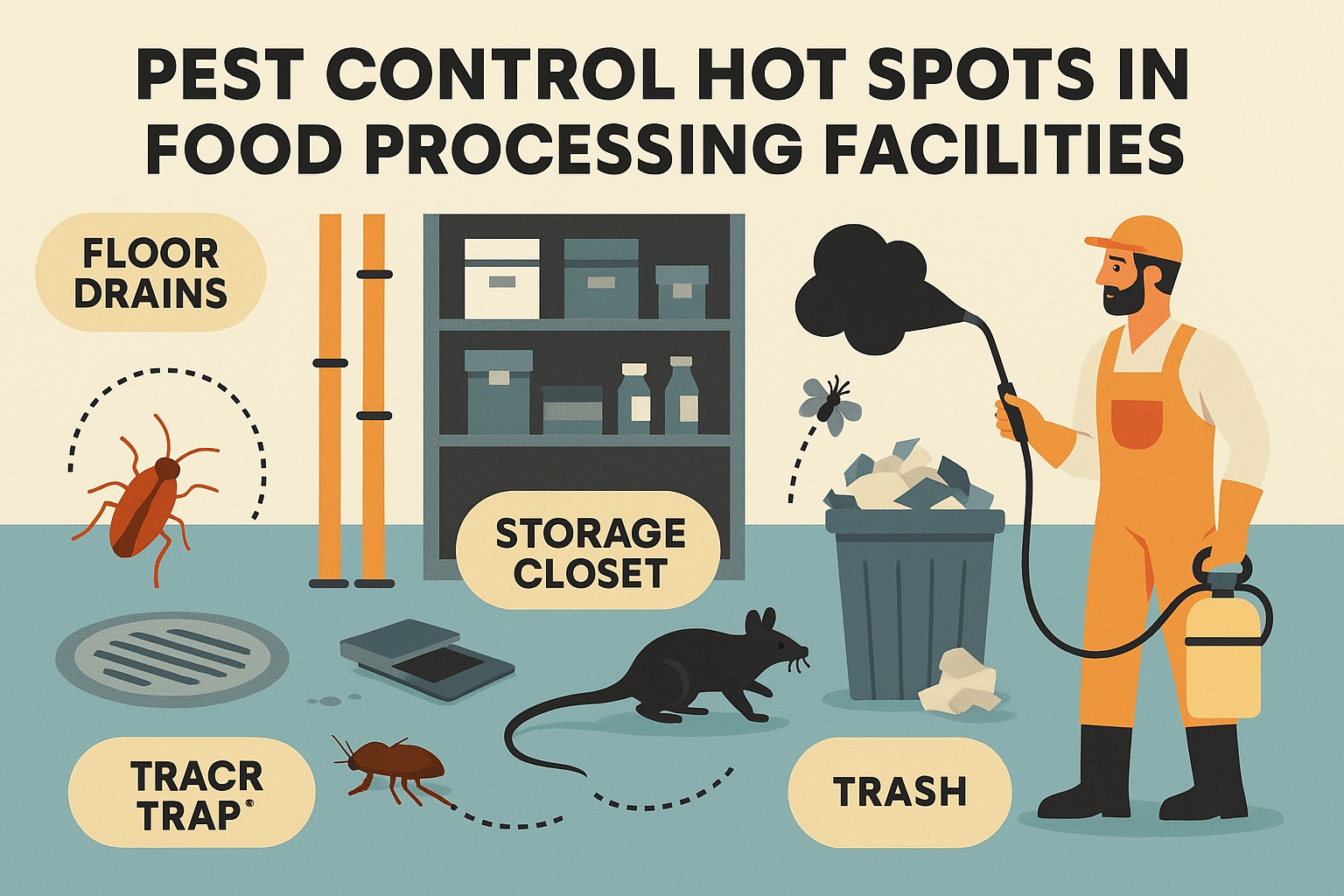
Floor drains are easy to overlook, but these hiding spaces are a perfect habitat for pests like flies and cockroaches. It doesn’t matter if they are wet or dry (double whammy), because they like both options. An effective fix for this is to equip drains with a second strainer to prevent pests from hanging out in the floor drain, but also to help prevent them from entering the facility. Floor drains are possible entrance points, too, with their connection to a network of pipes.
Professional extermination services across America frequently find that facilities with properly maintained floor drains experience significantly fewer pest issues. This simple upgrade can be one of the most cost-effective pest prevention strategies you implement.
That storage closet may have more in it than just shelves.
Let’s be honest; no one really likes cleaning the storage closet. This relatively undisturbed environment appeals to pests that like to hide in areas no one regularly inspects. Make sure to inspect anything going into storage before it even enters your facility to ensure any pests transported to your facility don’t get stored there. And keep products off the floor, away from the wall and spaced out on the shelves to minimize the places pests can reside undetected.
Many nationwide pest control companies report that storage areas are among the most common infestation sites they encounter. Regular integrated pest management protocols should always include thorough storage area inspections as part of your facility’s comprehensive pest control strategy.
Trash is their treasure.
Rodents can gnaw through just about anything, so those boxes and debris on the floor are an easy target. Don’t let trash pile up. And remember that the garbage that smells foul to us smells like an all-you-can-eat buffet to pests. Routinely remove odorous trash from your facility into dumpsters stationed away from the building.
Effective waste management is crucial for any successful pest management program. The best pest control services in the USA consistently emphasize that proper waste handling can eliminate up to 80% of potential pest attractants in food processing facilities.
Monitoring your facility is not a part-time job, and with the size and scale of operations, you have to rely on more than your own eyes. Engage your employees to help scout for pests when they are cleaning, inspecting incoming goods and retrieving ingredients from storage. And make sure your pest management provider is vigilant about checking the hottest hot spots to freeze pests in their tracks.
If you’re dealing with persistent pest issues in any of these areas, don’t wait for the problem to escalate. Professional pest control technicians have the expertise and tools necessary to address infestations quickly and effectively, helping you maintain the clean, safe environment your food processing facility requires.
Main Customer Support (USA)
Call Timing – Monday–Friday: 8am – 8pm
Saturday–Sunday: 9am – 6pm
Call Us – +1 (833) 246-4565
24/7 Emergency Helpdesk
Call Time – 24/7 All Day
Emergency Line – +1 (833) 974-5257
Nationwide Pest Control Assistance
For immediate help anywhere in the USA, contact:
+1 (833) 246-4565
or reach our emergency hotline at +1 (833) 974-5257
Remember, the key to successful pest management isn’t just knowing where to look – it’s having a reliable partner who understands the unique challenges of food processing facilities. With proper prevention strategies and professional support, you can keep these hot spots from becoming problem areas in your facility.
About the Author