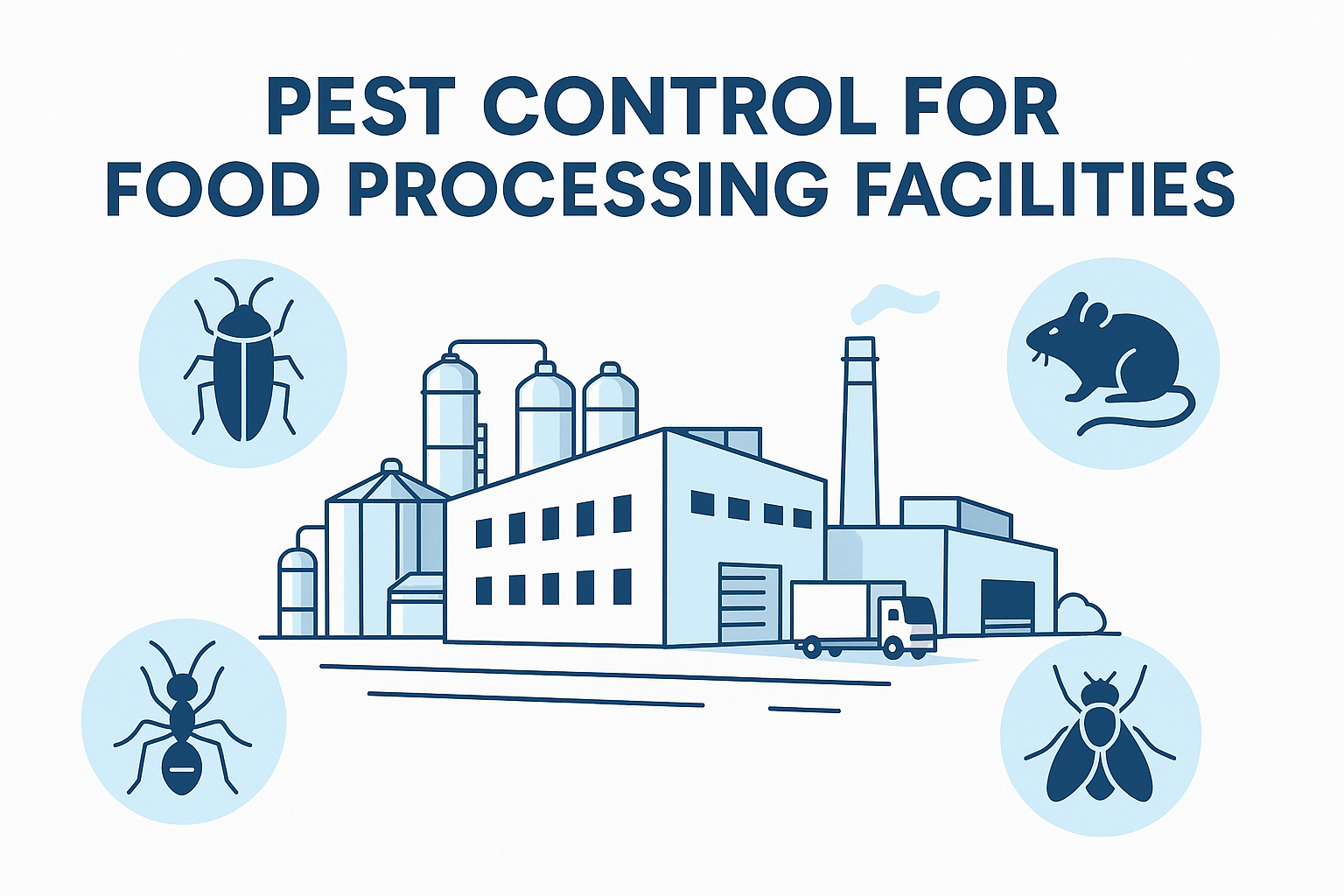
Maintaining proper sanitation and pest control in food processing facilities is one of the biggest challenges managers face today. When it comes to food safety audits, every detail matters. That’s why we’ve partnered with NSF International to bring you practical, actionable tips that help protect your facility from pests and the serious health risks they pose.
Whether you’re preparing for your next inspection or looking to strengthen your existing pest management program, understanding your facility’s most vulnerable areas is crucial for success. Here’s what every food processing manager needs to know about identifying and managing pest control hot spots.
Main Customer Support (USA)
Call Timing – Monday–Friday: 8am – 8pm
Saturday–Sunday: 9am – 6pm
Call Us – +1 (833) 246-4565
Essential Areas to Monitor During Facility Walk-Throughs
Professional pest control experts recommend focusing on these critical zones during your facility audits:
Exterior Perimeter Management: Keep all landscaping properly maintained with regular mowing and trimming. Your outdoor areas should be completely free of litter, weeds, pallets, and any clutter that could provide shelter or breeding grounds for insects, birds, rodents, and other pests. Work closely with your landscaping team to establish a gravel barrier of at least 18 inches around your entire facility perimeter – this simple step can dramatically reduce pest infiltration.
Entry Points and Window Sealing: Inspect all external windows and ventilation openings to ensure they’re effectively sealed when closed and properly protected against dust infiltration. Pay special attention to all doors, including overhead loading dock doors. These should maintain tight seals with absolutely no visible light showing between the floor and doorjambs.
24/7 Emergency Helpdesk
Call Time – 24/7 All Day
Emergency Line – +1 (833) 974-5257
Interior Space Optimization: Examine interior walls to ensure they’re clean and clear, allowing for thorough inspection access. Any spilled products, damaged ingredients, or food debris should be cleaned up or disposed of immediately to prevent attracting pests. Regular deep cleaning schedules are essential for maintaining these standards.
Strategic Trap and Monitoring Placement: Work with your professional pest management provider to ensure all traps and monitoring devices are strategically positioned based on expert recommendations. These devices require regular inspection and cleaning to remain effective. Light traps should be installed carefully to avoid actually attracting insects toward your facility rather than away from it.
Bird and Wildlife Exclusion: Implement comprehensive bird control measures using exclusion methods like nets, traps, and appropriate structural modifications. Document all bird activity, corrective actions taken, and results achieved as part of your facility’s detailed pest management records.
Nationwide Pest Control Assistance
For immediate help anywhere in the USA, contact:
+1 (833) 246-4565
or reach our emergency hotline at +1 (833) 974-5257
Advanced Pest Management Strategies for Food Facilities
Today’s food processing facilities require more than basic pest control – they need integrated pest management solutions that address the unique challenges of modern food safety regulations. Professional pest control services now offer specialized programs designed specifically for food and beverage processing environments.
These comprehensive programs typically include regular monitoring, detailed documentation, staff training, and emergency response capabilities. The best pest management providers understand the critical nature of food safety compliance and work closely with facility managers to ensure all pest control activities support rather than hinder production schedules.
Documentation and Compliance Best Practices
Proper documentation is absolutely crucial for successful food safety audits. Your pest management records should include detailed logs of all monitoring activities, any pest sightings or evidence discovered, corrective actions implemented, and follow-up verification procedures completed.
Many facilities benefit from digital monitoring systems that provide real-time alerts and automated reporting capabilities. These advanced systems help ensure nothing falls through the cracks while providing the detailed documentation that auditors expect to see.
Why Professional Pest Control Matters
While facility maintenance teams can handle many day-to-day cleaning and sanitation tasks, effective pest management requires specialized knowledge, professional-grade equipment, and ongoing training in the latest techniques and regulations.
Professional pest control technicians understand the complex relationship between food processing operations and pest behavior. They can identify potential problems before they become serious issues and provide customized solutions that work within the unique constraints of food production environments.
Don’t let pest control hot spots compromise your facility’s food safety record. Contact our experienced team today to learn how professional pest management services can help protect your operation, ensure compliance with food safety regulations, and give you peace of mind during your next audit.
Our nationwide network of certified pest control professionals is ready to help you eliminate current pest problems and prevent future infestations. We’re available 24 hours a day, 7 days a week to provide the expert support your facility needs.
About the Author