Running a retail clothing business comes with unexpected challenges, and one of the most damaging threats often goes unnoticed until it’s too late. Fabric-eating insects can silently destroy thousands of dollars worth of inventory, turning profitable merchandise into worthless, hole-riddled remnants. These destructive pests don’t discriminate – from high-end wool coats to synthetic blend garments, they can wreak havoc on your entire stock.
Understanding which bugs eat clothes and implementing proper prevention strategies isn’t just good business practice – it’s essential for protecting your investment. When searching for a pest control service or looking up “pest control near me,” retail business owners need specialized knowledge about fabric pests that goes beyond typical residential treatments.
The Most Destructive Fabric Pests Threatening Your Business
Professional pest control companies identify clothes moths and carpet beetles as the primary culprits in retail clothing damage. These seemingly insignificant insects can multiply rapidly in commercial environments, making early detection and professional pest removal service intervention critical for business survival.
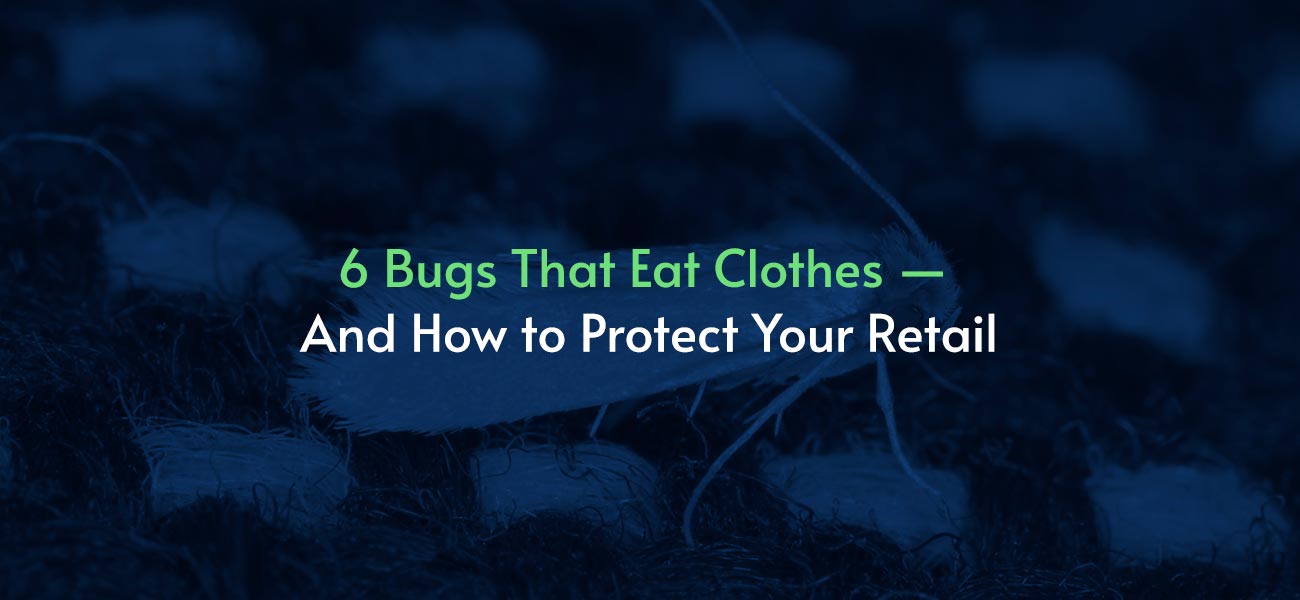
Clothes moths represent one of the most specialized threats to retail clothing businesses. These half-inch, beige-colored insects with fringed wings exclusively target animal fibers, showing particular preference for wool, fur, silk, feathers, felt, and leather products. Unlike their grain moth cousins, clothes moths actively avoid light, making them perfect hide-and-seek champions in dark storage areas, back rooms, and display corners.
What makes clothes moths particularly devastating for retailers is their feeding behavior. Adult moths don’t actually eat fabric – their larvae do all the damage. These creamy-white caterpillars can grow up to half an inch long and work tirelessly, creating threadbare spots and holes that render merchandise unsellable. The two main varieties – webbing and casemaking clothes moths – both cause identical damage patterns, though webbing moths create silken patches while casemaking moths drag portable fiber cases as they feed.
Items most at risk include sweaters, scarves, coats, blankets, rugs, down pillows, and comforters. Experienced pest exterminators note that these pests rarely attack items in regular use, preferring stored inventory that remains undisturbed for extended periods.
Carpet beetles present a different but equally serious threat to retail businesses. These tiny, round insects measure only 1/16 to 1/8 inch in length but pack tremendous destructive potential. Unlike clothes moths, adult carpet beetles are attracted to sunlight and can often be spotted on windowsills during inspections by local pest control professionals.
Adult carpet beetles feed on pollen, but their reproductive behavior creates the real problem. Females lay 50-100 eggs near food sources, and the hatching larvae immediately begin feeding on wool, fur, felt, silk, feathers, skins, and leather. The transformation from egg to adult takes two to six months, providing ample time for extensive damage to occur undetected.
Four Additional Clothing-Destroying Pests
While moths and beetles dominate fabric pest discussions, experienced commercial pest control specialists regularly encounter four other clothing-damaging insects in retail environments: cockroaches, crickets, silverfish, and termites.
Cockroaches rank among the most challenging pests for emergency pest control situations. These nocturnal insects hide behind walls during daylight hours, making daytime sightings a clear indicator of serious infestation requiring urgent pest control intervention. Beyond their disease-spreading capabilities, cockroaches actively seek out clothing contaminated with perspiration, body fluids, food spills, and laundry starch.
Adult cockroaches range from 3/8 inches to 1 5/8 inches in length and reproduce at alarming rates. Their feeding damage appears as holes or significantly weakened fabric fibers, often accompanied by waste stains that permanently damage merchandise. Given their rapid reproduction, cockroach problems frequently require 24 hour pest control response to prevent complete inventory contamination.
Cricket infestations typically occur during late summer and fall when outdoor populations seek indoor shelter. While generally considered nuisance pests, crickets cause substantial clothing damage by targeting body soil, food stains, and laundry starch. Their feeding creates holes through fabric in wool, cotton, silk, synthetic materials, furs, and carpets.
These light brown to black insects with distinctive long antennae and large back legs can enter through open doors, windows, or foundation cracks. Their small size makes entry point identification challenging, often requiring professional after hours pest control inspection to locate access routes.
Silverfish and firebrats operate as nocturnal fabric destroyers, targeting starchy clothing substances in cotton, silk, and linen garments. These fast, wingless insects have distinctive flat, carrot-shaped bodies covered in scales – silver-blue-gray for silverfish, gray-brown for firebrats.
Silverfish prefer damp, cool locations like basements, garages, laundry rooms, attics, and storage areas. Firebrats favor warm, moist environments near ovens, heating units, and hot water pipes. Both species create holes in fabric fibers and their presence indicates excessive moisture conditions requiring immediate attention from rapid pest control service providers.
Termite clothing damage often surprises business owners who associate these pests exclusively with structural wood damage. Drywood termites actively feed on clothing stained with body soil, food, or beverages, cutting directly into fabric to create holes.
These tiny insects resemble winged ants but have straight antennae, broad waists, and uniform milky-colored wings. Drywood termites require minimal moisture and can establish multiple colonies within single structures, making them particularly challenging for standard fast pest exterminator treatments.
Financial Impact and Business Risks
Fabric pests pose serious financial threats to retail clothing businesses through inventory destruction, contamination spread, and potential business closure. These cryptic insects often feed in dark, concealed locations, making damage detection difficult until infestations reach critical levels.
Professional best pest control service providers emphasize that fabric pest problems extend beyond inventory loss. Cockroach infestations create health risks for customers and staff while potentially triggering regulatory closure. Termite colonies can cause structural damage requiring extensive repairs. Any significant infestation risks temporary or permanent business shutdown and lasting reputation damage.
The protein keratin, naturally occurring in animal fibers, hair, and nails, attracts fabric-eating insects to wool, fur, silk, feathers, leather, felt, and linen products. These outdoor insects enter buildings through windows, doors, foundation cracks, or infested merchandise deliveries.
Professional Identification and Treatment
Effective fabric pest management requires professional identification since different species demand different treatment approaches. Experienced same day exterminator services can quickly distinguish between pest types using specific damage patterns and infestation signs.
Clothes moths create silky tunnels, patches of damage, crust-like spots, and sticky tubes on affected garments. Carpet beetles cause thin, bare areas, shed larval skins, and the presence of tiny beetles around merchandise.
Cockroach indicators include dark smears along surfaces, musty odors, coffee-ground-like droppings, dead skins, egg capsules, and tiny chew marks. Cricket damage appears as large holes with distinctive chew patterns, often accompanied by nighttime chirping sounds.
Silverfish and firebrat evidence includes fecal matter, shed skins, yellow staining, and multiple small holes in affected items. Termite signs feature wing piles, wood damage, and tiny holes in both structural materials and fabrics.
Comprehensive Prevention Strategies
The most effective fabric pest prevention relies on routine professional residential pest control adapted for commercial environments. Regular weekend pest control services create protective barriers while identifying potential entry points before they become problematic.
Professional inspections reveal cracks, gaps, holes, and other vulnerability areas requiring attention. Early detection prevents minor issues from becoming major infestations requiring emergency exterminator intervention.
Comprehensive pest management also prevents other common retail pests including rodents and flies, which spread diseases and contaminate surfaces throughout business premises. Integrated immediate pest removal strategies address multiple pest threats simultaneously.
Specialized Treatment Options
Major pest control providers offer specialized fabric pest treatments tailored to retail environments. Orkin pest control services include comprehensive inspections, targeted treatments, and ongoing monitoring specifically designed for commercial clothing retailers.
Terminix pest control provides integrated pest management programs combining prevention, treatment, and monitoring to protect valuable inventory investments. Their commercial specialists understand the unique challenges facing retail clothing businesses.
Ehrlich pest control offers customized treatment plans addressing specific fabric pest challenges while minimizing disruption to daily business operations. Their commercial expertise includes specialized knowledge of textile industry pest problems.
Rentokil pest control delivers comprehensive commercial solutions including emergency response capabilities for serious infestations threatening business continuity. Their integrated approach addresses immediate problems while preventing future occurrences.
Truly Nolen pest control provides seasonal pest management programs recognizing that fabric pest activity varies throughout the year, requiring adjusted treatment strategies for optimal protection.
Other reputable providers including Clark pest control, Bulwark pest control, Arrow exterminators, Sage pest control, Aptive pest control, Hawx pest control, Moxie pest control, Home Team pest defense, Greenix pest control, and Western exterminator offer specialized commercial fabric pest management services.
Protecting retail clothing inventory from fabric-destroying pests requires professional expertise, regular monitoring, and rapid response capabilities. Don’t wait until valuable merchandise shows damage – contact experienced commercial pest control professionals to assess your vulnerability and implement comprehensive protection strategies. Your business investment depends on staying ahead of these silent destroyers.
About the Author