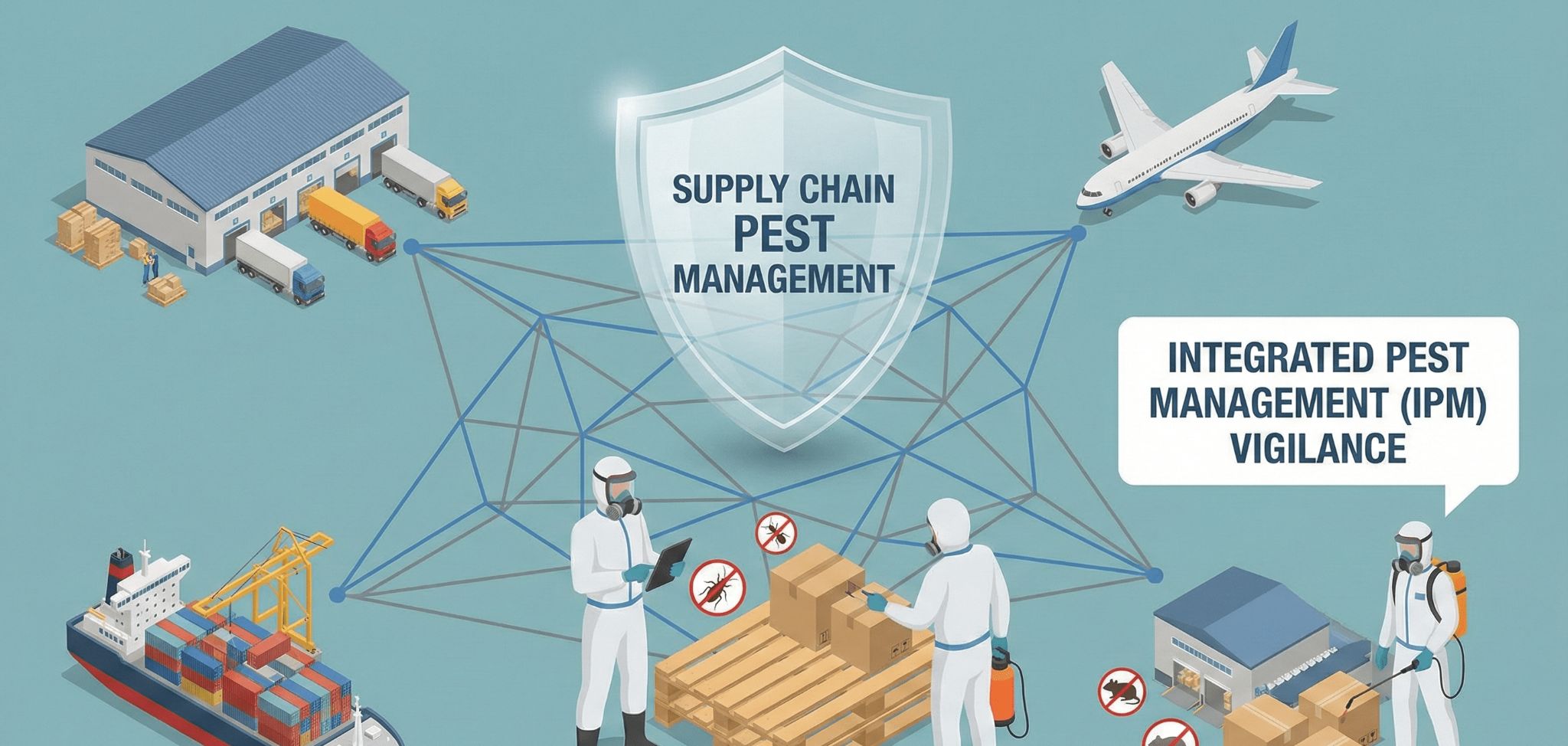
In today’s interconnected supply chain ecosystem, a single pest infestation can rapidly spread across multiple facilities, creating widespread contamination and costly shutdowns. This reality makes comprehensive pest control service management not just important, but absolutely critical for business continuity.
The interconnected nature of modern supply chains means that your facility’s pest management success depends heavily on your partners’ vigilance. When seeking a reliable pest control company or evaluating your suppliers’ pest management protocols, understanding the complete picture becomes essential for protecting your operations.
Your suppliers, distribution networks, and transportation partners all play crucial roles in maintaining pest-free operations. Each link in this chain must demonstrate commitment to effective pest removal service practices and maintain rigorous standards that protect the integrity of all shipments.
Key Questions for Supply Chain Partners
When evaluating partners’ pest control programs, these essential questions will help you identify potential vulnerabilities:
1. Do they practice Integrated Pest Management (IPM)?
A comprehensive IPM approach combines prevention, monitoring, and targeted treatment strategies. Partners utilizing professional pest exterminator services with IPM methodologies demonstrate commitment to sustainable, effective pest control rather than reactive treatments.
Look for partners who work with established providers like orkin pest control, terminix pest control, or other reputable companies offering commercial pest control services. These partnerships indicate serious investment in professional-grade pest management systems.
2. Do they have a sanitation and maintenance routine?
Consistent sanitation practices form the foundation of effective pest prevention. Partners should maintain regular cleaning schedules, proper waste management, and facility maintenance that eliminates pest attractants and breeding sites.
3. Do they have a system for inspecting products before shipment?
Pre-shipment inspection protocols help identify potential pest issues before products leave facilities. This proactive approach prevents contaminated shipments from entering your supply chain and affecting your operations.
Maintaining Open Communication
Effective supply chain pest management requires continuous communication between all partners. Pest pressures fluctuate with seasonal changes, weather patterns, and geographic factors, making standardized approaches insufficient for comprehensive protection.
Regular communication helps identify emerging threats, seasonal pest pressure increases, and regional challenges that might affect your supply chain. This collaborative approach enables proactive responses rather than reactive damage control.
Strengthening Your Own Operations
While partner evaluation remains crucial, securing your own facilities provides the foundation for supply chain pest management. Consider these essential elements:
Professional Pest Control Services: Partner with established providers offering 24 hour pest control and emergency pest control services. Companies like ehrlich pest control, rentokil pest control, or truly nolen pest control provide comprehensive commercial solutions.
Exclusion Measures: Implement physical barriers that prevent pest entry points. Professional pest control near me services can identify vulnerabilities and recommend appropriate exclusion strategies for your specific facility type.
Sanitation Protocols: Develop and maintain rigorous cleaning procedures that eliminate pest attractants. This includes proper waste management, food storage protocols, and moisture control measures.
Regular Inspections: Establish routine inspection schedules with your local pest control provider to identify pest activity before problems escalate. Early detection significantly reduces treatment costs and operational disruptions.
Specialized Pest Management
Different facilities face unique pest challenges requiring specialized approaches:
Residential pest control strategies differ significantly from commercial applications. Warehouses, food processing facilities, and distribution centers each require tailored approaches addressing specific pest pressures and regulatory requirements.
Consider services like ant control service, termite control service, bed bug treatment, and mosquito control near me based on your facility’s specific risk factors and geographic location.
Emergency Response Capabilities
Despite preventive measures, pest emergencies can occur. Ensure your pest management provider offers urgent pest control, same day exterminator services, and rapid pest control service when situations require immediate intervention.
Having access to after hours pest control and weekend pest control services ensures that pest issues don’t escalate during non-business hours, protecting your operations and reputation.
Comprehensive Service Options
Modern pest control extends beyond traditional extermination. Consider providers offering comprehensive services including spider control service, cockroach control, and specialized treatments for industry-specific pests.
Companies like clark pest control, bulwark pest control, arrow exterminators, sage pest control, aptive pest control, hawx pest control, moxie pest control, home team pest defense, greenix pest control, and western exterminator offer various service levels and specializations.
Professional Support and Consultation
When you need expert guidance on supply chain pest management, professional consultation can help identify vulnerabilities and develop comprehensive protection strategies.
Contact Information:
Primary Service Line: +1 (855) 629-1478
Business Hours: Monday-Friday: 8am-8pm, Saturday-Sunday: 9am-6pm
24/7 Emergency Services: +1 (855) 629-1478
Availability: 24/7 All Day for urgent pest control situations
Moving Forward
Supply chain pest management requires comprehensive planning, professional partnerships, and ongoing vigilance. By asking the right questions, maintaining open communication, and implementing robust pest control measures, you can protect your operations from pest-related disruptions.
Remember that effective pest management represents an investment in operational continuity, product quality, and customer satisfaction. The cost of prevention always remains significantly lower than the cost of pest-related contamination, shutdowns, or reputation damage.
Working with established pest control service providers and maintaining rigorous standards throughout your supply chain creates the comprehensive protection your business needs in today’s competitive marketplace.

Cruise Booking Specialist
Vishal Shimpi is a Cruise Booking specialist with 10 years of experience. He guides travelers to find the best cruise packages and onboard amenities.